 Freezer Fold
Granita vs. Sorbet: Texture, Method, and Uses
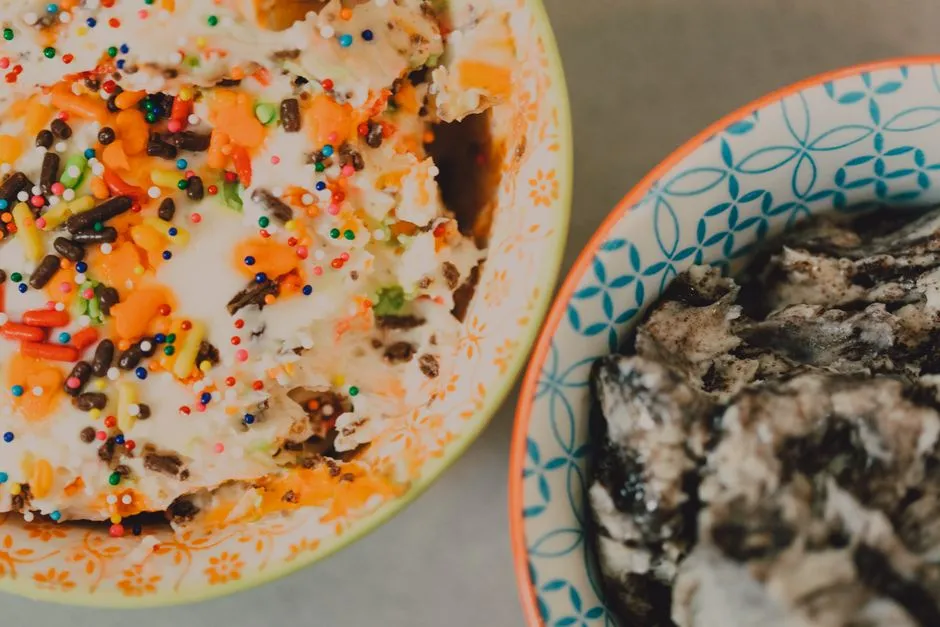
Granita is scraped and crystalline; sorbet is churned and smooth
Granita and sorbet are usually dairy-free frozen desserts built from flavored liquid and sugar, but their textures come from different formulas and freezing methods. Granita freezes in a shallow container and is raked into visible ice crystals. Sorbet is churned or processed to keep its crystals much finer, producing a denser, smoother scoop. Granita recipes can tolerate a deliberately crystalline result; sorbet depends more closely on balancing sugar, water, and fruit solids.
Recipes and regional traditions vary, so texture is more useful than one rigid ingredient rule. There is no universal granita-to-sorbet conversion ratio.
Granita vs. sorbet at a glance
| Feature | Granita | Sorbet |
|---|---|---|
| Target texture | Flaky, granular, or crystalline | Smooth, fine-grained, scoopable |
| Main freezing action | Periodic scraping or raking | Churning or repeated processing |
| Special machine required | No | Often helpful; some methods use other equipment |
| Serving style | Scraped into a glass or bowl | Scooped like ice cream |
| Formula sensitivity | Flexible, though sugar still affects texture | More sensitive to the balance of sugar, water, and fruit solids |
Neither texture is a failed version of the other. Large, separate crystals are the point of granita and the problem a sorbet recipe works to avoid.
How do granita recipe ratios differ from sorbet?
Granita often works with less added sugar relative to its listed liquid because it is supposed to freeze into separate crystals. A scoopable sorbet generally needs a more carefully balanced base. That is a useful direction, not a universal formula: naturally occurring fruit sugar, dissolved solids, acidity, and the freezing method all change the result.
Two published lemon recipes make the difference concrete:
| Tested recipe | Added sugar | Listed water and juice | Sugar-to-listed-liquid ratio by volume | Freezing method |
|---|---|---|---|---|
| Gourmet lemon granita via Epicurious | 1/3 cup, with an optional increase to 1/2 cup | 1 cup water + 1/2 cup lemon juice | 1:4.5 as written, or 1:3 at the sweeter option | Freeze and stir periodically |
| Emeril Lagasse lemon sorbet via Food Network | 1 cup | 1 cup water + 1 cup lemon juice | 1:2 | Freeze in an ice-cream machine |
The arithmetic uses only the ingredient volumes printed in the recipes. For the standard granita, one-third cup sugar divided by one-and-a-half cups listed liquid becomes 1:4.5. For the sorbet, one cup sugar divided by two cups listed liquid becomes 1:2. Lemon solids and naturally occurring sugars are not measured by this shortcut, so these figures compare two recipes; they do not establish a law for every fruit or every freezer.
The practical lesson is simple: do not take a sorbet formula, reduce the sugar to a guessed “granita ratio,” and expect the same result. Start with a tested formula for the texture you want. A calculator can compare ingredient lists, but it cannot taste your strawberries or negotiate with a very ripe peach.
How granita gets its texture
A granita base is poured into a broad, freezer-safe container. As ice forms at the edges and surface, a fork or similar utensil breaks it up and moves liquid toward colder areas. Repeating the scrape creates irregular flakes instead of one solid block. The University of Illinois Extension describes granita as coarse and sorbet as smooth, and notes that granita does not require an ice-cream maker.
The final texture can range from coarse shards to a finer snowy consistency. Container depth, freezer temperature, sugar level, and scraping frequency all matter. Follow a tested formula for the base because too little sugar can freeze hard while too much can resist freezing.
Granita is a practical choice when you want a clearly icy dessert and do not have an ice-cream machine. It can be served as a light dessert, a palate refresher, or alongside fruit or cream where appropriate.
How sorbet becomes smooth
Sorbet is usually churned as it freezes. The moving dasher scrapes frozen material from the cold surface and disperses it through the base, limiting the growth of large crystals while incorporating some air. A finished sorbet should feel cohesive and smooth rather than flaky.
Sugar does more than sweeten: it changes how much of the water freezes and how firm the dessert becomes. Fruit solids and acidity also affect the result. That is why casually cutting sugar or swapping fruits in a tested sorbet recipe can produce a hard block, a slushy mixture, or an imbalanced flavor.
No-churn sorbet methods exist, but they usually rely on a blender, food processor, repeated stirring, or a formula designed for that process. A standard churned recipe may not transfer directly.
Are either of them ice cream?
Not in the usual culinary sense. Ice cream contains dairy fat and is churned to manage ice crystals and air. Granita and sorbet are commonly based on fruit, coffee, tea, or another flavored liquid without dairy, though individual recipes and commercial labels can differ.
Sherbet is another category and commonly includes some dairy in U.S. usage. Italian ice is related to these water-based desserts, but naming and texture vary by maker and place. When dairy, egg, or another allergen matters, read the complete ingredient information rather than trusting the product name. The U.S. Food and Drug Administration explains that packaged foods marketed in the United States must disclose major allergens and advises reading all ingredient information; a voluntary “may contain” statement is not a substitute for that check. For an unpackaged dessert, ask the maker directly about ingredients and cross-contact.
Which one should you make?
Choose granita when you want:
- distinct refreshing crystals;
- a fork-scraped freezer method;
- a dessert served loose rather than as a smooth scoop.
Choose sorbet when you want:
- a fine, cohesive texture;
- scoopable portions;
- to use a tested, balanced formula with a churning or specified no-churn method.
If your real goal is creamy ice cream, do not use granita's visible crystals as the standard. The guide to why homemade ice cream turns icy explains the opposite texture problem.
Explore more clear comparisons in Frozen Dessert Basics.
Let the intended crystal size decide
Granita celebrates ice crystals; sorbet tries to keep them small. Start with the texture you want, choose a tested base designed for that method, and resist converting one into the other by changing only the final freezing step. That gives the recipe a fair chance before the fork—or the churn—gets involved.
Sources
- Epicurious, Lemon Granita — ingredient volumes, optional sugar increase, periodic stirring method, and yield. Accessed September 4, 2026.
- Food Network, Lemon Sorbet — ingredient volumes, syrup preparation, machine-freezing method, and yield. Accessed September 4, 2026.
- University of Illinois Extension, Preparing Watermelon — the coarse-granita/smooth-sorbet distinction and no-machine granita method. Accessed September 4, 2026.
- U.S. Food and Drug Administration, Have Food Allergies? Read the Label — U.S. packaged-food allergen disclosure and label-reading guidance. Accessed September 4, 2026.
Frequently asked questions
Is granita the same as sorbet?
No. They may use similar flavored liquids, but the intended textures differ. Granita is periodically scraped to create separate crystals or flakes. Sorbet is churned or processed to produce much finer crystals and a cohesive texture that can usually be scooped. Recipe balance matters to both, but smooth sorbet is generally more formula-sensitive.
How do granita recipe ratios differ from sorbet?
Granita often uses less added sugar relative to listed liquid because separate crystals are desirable, while scoopable sorbet usually needs tighter sugar-water balance. In the two lemon recipes compared here, the granita is 1:4.5 by volume and the sorbet 1:2. Those are recipe-specific examples, not universal conversion ratios.
Do you need an ice cream maker for granita?
No. A typical granita method uses a shallow freezer-safe container and a fork or similar utensil. The base freezes undisturbed for intervals, then is scraped repeatedly. Follow the recipe's schedule and sweetness because container depth and formula affect how it freezes. An ice-cream machine is more commonly used for smooth sorbet.
Does sorbet contain dairy?
Sorbet is generally a dairy-free frozen dessert, but individual recipes and commercial products can vary by maker and country. Read the full ingredient information and allergen statement rather than relying only on the name. For unpackaged dessert, ask about ingredients and cross-contact, especially when managing a serious food allergy.
Is granita supposed to be icy?
Yes. Distinct ice crystals are granita's intended texture, ranging from coarse flakes to a finer snow depending on the method and local style. A solid unscratchable block is not the goal, but visible crystals are not a defect as they would be in smooth sorbet. Scraping intervals help form the loose texture.
Can you turn a sorbet recipe into granita?
Sometimes a suitable base can be frozen and scraped, but its sweetness and freezing behavior may not suit the intended texture. Sorbet formulas are balanced for a different process. Use a tested granita method when possible instead of assuming the ingredients transfer directly or changing only the final freezing step.
What is the difference between sorbet and sherbet?
In common U.S. usage, sorbet is water-based and generally dairy-free, while sherbet usually includes some dairy. Naming and recipes vary across countries and manufacturers, so the complete ingredient information and allergen label are more reliable than the product name for dietary decisions. Ask the maker about unpackaged desserts.