 Freezer Fold
Why Homemade Ice Cream Is Sticky or Gummy
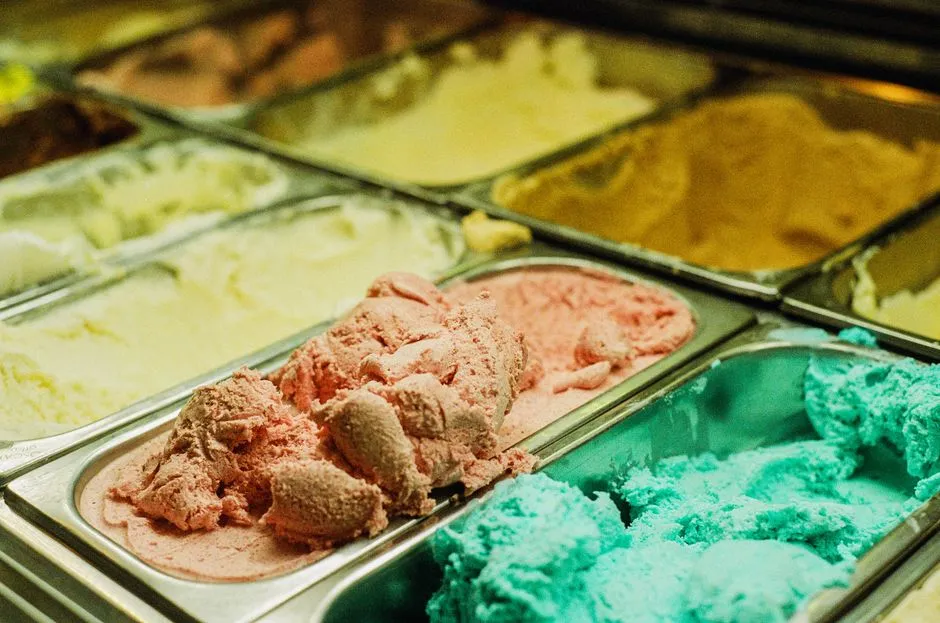
- Why is my ice cream sticky or gummy?
- What does gummy mean here?
- Why can stabilizers help and still cause problems?
- What can you learn from the quantities?
- Are sugar, egg yolks and churning interchangeable fixes?
- When is a chewy texture intentional?
- Can you safely keep the current batch?
- What should you change next time?
- Sources
Why is my ice cream sticky or gummy?
A pasty, gummy ice cream can reflect too much stabilizer or too little incorporated air, but stickiness alone does not identify the cause. Check the exact recipe, ingredient products and measurements before changing the next batch. Keep the freezer at 0°F; use pasteurized dairy and pasteurized eggs or a properly cooked egg base. Never taste uncertain food for safety. Discard outage-thawed ice cream even if crystals remain.
Start with the texture the recipe promised. An elastic dessert is not automatically a failed version of a light vanilla scoop. This desk-researched guide helps you separate a formulation question from an ingredient-measuring mistake; it does not offer a tested repair for a finished tub.
What does gummy mean here?
The University of Guelph's body and texture chapter describes gummy body as pasty or putty-like and identifies insufficient overrun, excessive stabilizer or an unsuitable stabilizer as causes. Overrun means the volume increase from incorporated air.
That is different from merely being hard to scoop. A useful description might be “smooth but unusually dense” or “a sticky ribbon around the caramel swirl.” Keep the location in the note: a problem limited to a topping is not automatically a property of the whole base.
Do not conduct a taste test on food with an uncertain handling history. Use observations already made during normal, safe serving. For a firm but smooth batch, the separate hard-ice-cream guide covers recipe balance and serving conditions.
Why can stabilizers help and still cause problems?
A stabilizer is an ingredient used to manage consistency and structure. Guelph's stabilizer chapter explains that food gums increase viscosity, or resistance to flow, in the mix and its unfrozen portion. They can limit ice-crystal growth during storage, but their use can also contribute to excessive thickness and a heavy or chewy body.
The chapter names guar gum, locust bean gum and xanthan gum among the options and stresses that different stabilizers have different characteristics; combinations can work together. A packet labelled “ice cream stabilizer” is therefore not necessarily the same ingredient as a jar of one gum.
Our practical recommendation is to compare the exact product and measurement with the recipe, not to buy another thickener immediately. Check whether a blend was substituted for a single ingredient, whether a small quantity was misread, and whether the recipe already included the ingredient you added.
What can you learn from the quantities?
Here is an original, fictional measurement audit, not a recipe or a kitchen trial. The unnamed recipe is assumed to specify a particular stabilizer blend by weight.
| Measurement record | Batch A | Batch B |
|---|---|---|
| Listed blend amount | 2 g | 2 g |
| Recorded amount added | 2 g | 4 g |
| Difference from recipe | 0 g | 2 g extra |
| Product identity | Matches recipe | Matches recipe |
Batch B used 4 ÷ 2 = 2 times the listed amount: 100% more. This establishes a measuring difference, not a predicted doubling of gumminess. The figures are not a recommended dose for any ice cream.
For a future batch, following the original amount makes a more interpretable comparison than halving the sugar and changing the cream at the same time. If your measuring equipment cannot reliably measure the recipe's quantity, choose a recipe suited to your equipment or ask the author for an appropriate method. Do not invent a grams-to-teaspoons conversion.
Keep the original note and add the correction beside it. “Used 4 g; intended 2 g” is useful later. Replacing it with “used 2 g” would erase the very error you are trying to understand.
Are sugar, egg yolks and churning interchangeable fixes?
No. They belong in the audit, but they do not all perform the same job.
Guelph's sweetener chapter explains that sugars affect freezing point as well as sweetness. It also distinguishes corn-syrup types whose properties differ. “Too sweet” and “too gummy” are not equivalent diagnoses; replacing a named syrup or cutting sugar can change more than flavor.
The university's emulsifier chapter identifies egg yolk as a traditional emulsifier, helping develop fat structure and air distribution. That is not evidence that every extra yolk causes gumminess, or that yolk can replace any gum spoon for spoon.
Record the exact yolks, sweeteners and process used. Do not add raw egg to a finished batch. Do not extend churning indefinitely because low overrun appears on a technical defect list: follow the recipe and appliance instructions for capacity and endpoint. This guide gives no universal churn time or claim that longer churning cures stickiness.
When is a chewy texture intentional?
Go Türkiye's Istanbul dessert guide describes Maraş-style dondurma as dense and elastic, thickened with sahlep. That provides a specific example of a different intended texture, not a reason to relabel an accidentally gummy vanilla batch.
Before changing a formula, ask whether its author describes the result as elastic, dense, light or softly scoopable. If the stated style does not suit you, selecting a different complete recipe is more straightforward than redesigning it by removing individual ingredients. Explore method comparisons through Frozen Dessert Basics.
Can you safely keep the current batch?
Texture alone cannot answer that question. Follow FDA storage guidance: freezer at 0°F, refrigerator at 40°F or below, checked with appliance thermometers. Perishables must not sit at room temperature beyond two hours, or one hour above 90°F. These are limits, not suggested dessert-softening times.
For an outage thaw, FoodSafety.gov's ice-cream row says discard even when crystals remain and the food feels refrigerator-cold. Do not transfer its general refreezing permission to this exception. Never taste to determine safety.
For the next base, FDA's homemade-ice-cream guidance identifies raw or undercooked eggs as a Salmonella risk. Use pasteurized dairy and appropriate pasteurized egg ingredients or a properly cooked base; FDA advises a cooked base for optimal safety, especially for higher-risk people. Follow the complete cooking and cooling instructions.
Read all ingredient and mix-in labels for allergens, including milk and egg. An absent voluntary “may contain” statement does not establish freedom from cross-contact; ask the manufacturer if uncertain. Do not serve an unsuitable ingredient merely because it improves texture.
What should you change next time?
Choose one documented discrepancy to address, or return to the complete original recipe if several changes were made. Keep the recipe version, product names, amounts and method together. If everything matched, send those details and the precise observation to the recipe author instead of escalating the stabilizer dose.
A useful result is not only a better scoop: it is knowing what was actually changed. More process planning is collected in Ice Cream Skills.
Sources
- University of Guelph: body and texture defects
- University of Guelph: stabilizers
- University of Guelph: sweeteners
- University of Guelph: emulsifiers
- Go Türkiye: Istanbul desserts and dondurma
- FDA: safe food storage
- FoodSafety.gov: power-outage decisions
- FDA: homemade ice cream and egg safety
- FDA: food-allergen labels
Frequently asked questions
Does gummy ice cream always mean too much stabilizer?
No. A pasty texture can have more than one formulation explanation, and a sticky topping can be separate from the base. Compare the actual ingredient products, quantities and method with the complete recipe. A recorded discrepancy is useful evidence, but the appearance alone does not identify one ingredient as the cause.
Can I replace one stabilizer with another?
Do not assume a blend and a single gum are interchangeable by weight or volume. Use the exact ingredient the recipe specifies, or seek a complete formula developed for the product you have. The measurement audit here identifies an amount difference; it does not supply a substitution ratio or recommended dose.
Should I cut the sugar or egg yolks?
Not simply because the dessert seems gummy. Record whether either ingredient differed from the original recipe before changing it again. Sweeteners and emulsifiers have different functions, so removing one is not a general correction for another. Never add raw egg to a finished batch; follow safe base preparation and cooling instructions.
Is chewy ice cream always a mistake?
No. Maraş-style dondurma is a named example of an intentionally dense, elastic dessert. Judge a recipe against its stated goal instead of assuming every ice cream should resemble the same vanilla scoop. If you prefer a lighter result, choose a complete recipe intended for that texture rather than improvising ingredient deletions.
Can I melt gummy ice cream and churn it again?
This guide does not offer melting and rechurning as a repair. First establish safe ingredients and handling; an uncertain history means discarding the batch. FoodSafety.gov specifically says to discard outage-thawed ice cream even when crystals remain. Never taste it to determine safety, and do not use refreezing as a safety reset.